
Cómo observar tu mente: el Mapa SPH y tus puntos ciegos frente a la IA
octubre 15, 2026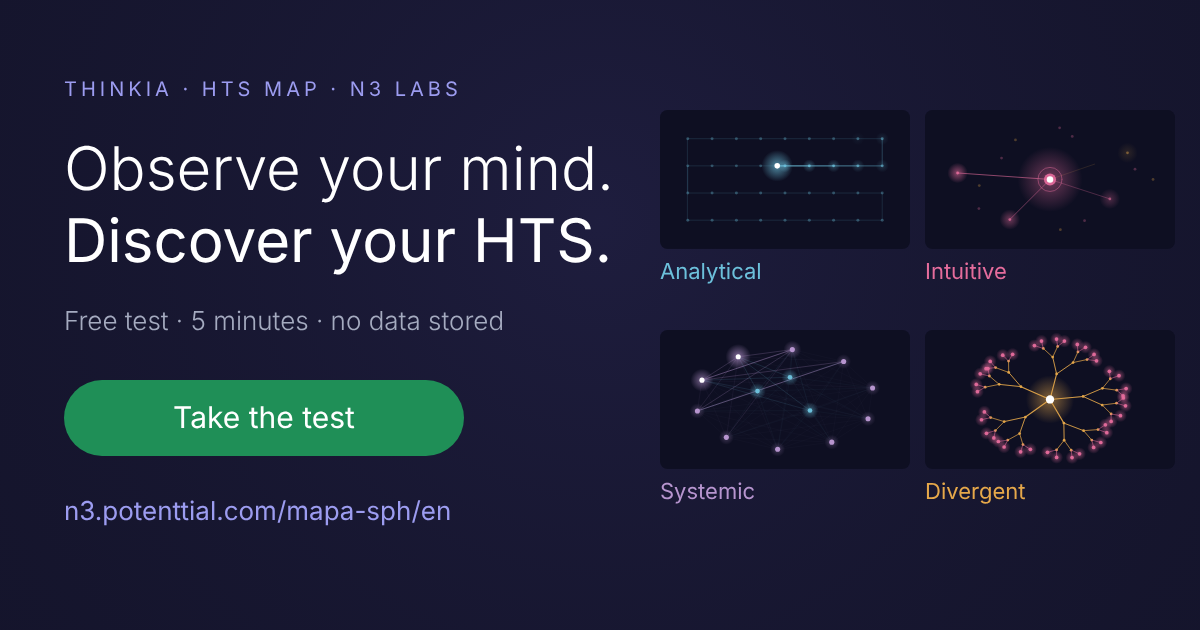
By Engel Fonseca, entrepreneur, technology leader and cognitive neuroscientist · Founder of N3 Labs
Most of us know what we decide. Few of us know which system we decide with. Cognitive neuroscience offers a way to see it, and artificial intelligence makes it urgent.
To understand the topic, read first:
- AI to Complement Human Thinking Systems (HTS) with Artificial Thinking Systems (ATS): what HTS and ATS are and why the first should guide the second.
- ATS Breakdown of the Leading AI Tools from N3 Labs: the thinking type of ChatGPT, Copilot, Gemini, Claude, Grok and Meta AI.
- Does an AI Carry the Bias of Its Human Creator?
Thinking about how you think has a brain basis
Psychology calls the ability to observe your own thinking metacognition, a term John Flavell made popular in 1979. It is not abstract. In 2010, Stephen Fleming and colleagues reported in Science that how accurately people judge their own decisions relates to the structure of the anterior prefrontal cortex.
The upshot is practical: what you can observe, you can configure. The Thinktech method starts there. First you see your system; then you decide what to change.
Four ways of thinking
The HTS Map groups your answers into four types. None is better than another: each has strengths and risks.
| Type | How it processes | Scientific reference | Typical risk |
| Analytical | Step by step, with data | Daniel Kahneman’s System 2 (2011) | Analysis paralysis |
| Intuitive | Reads patterns and decides fast | System 1 and Antonio Damasio’s somatic marker (1994) | Overconfidence |
| Systemic | Sees connections and second-order effects | Systems thinking (Peter Senge, Donella Meadows) | Slowness from seeking full consensus |
| Divergent | Opens alternatives | Default mode + executive control networks (Beaty et al., PNAS, 2018) | Scattered priorities |
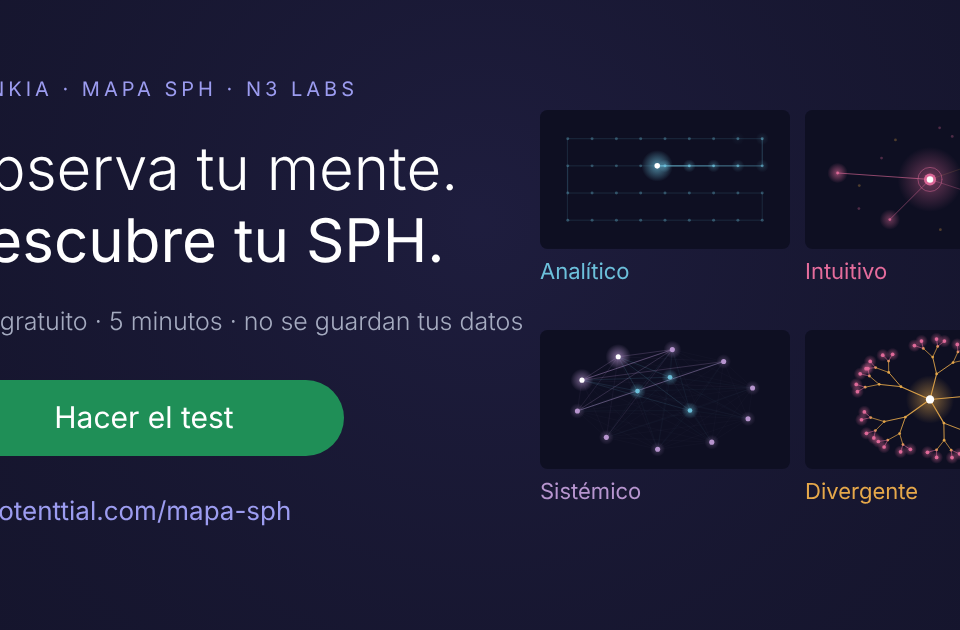
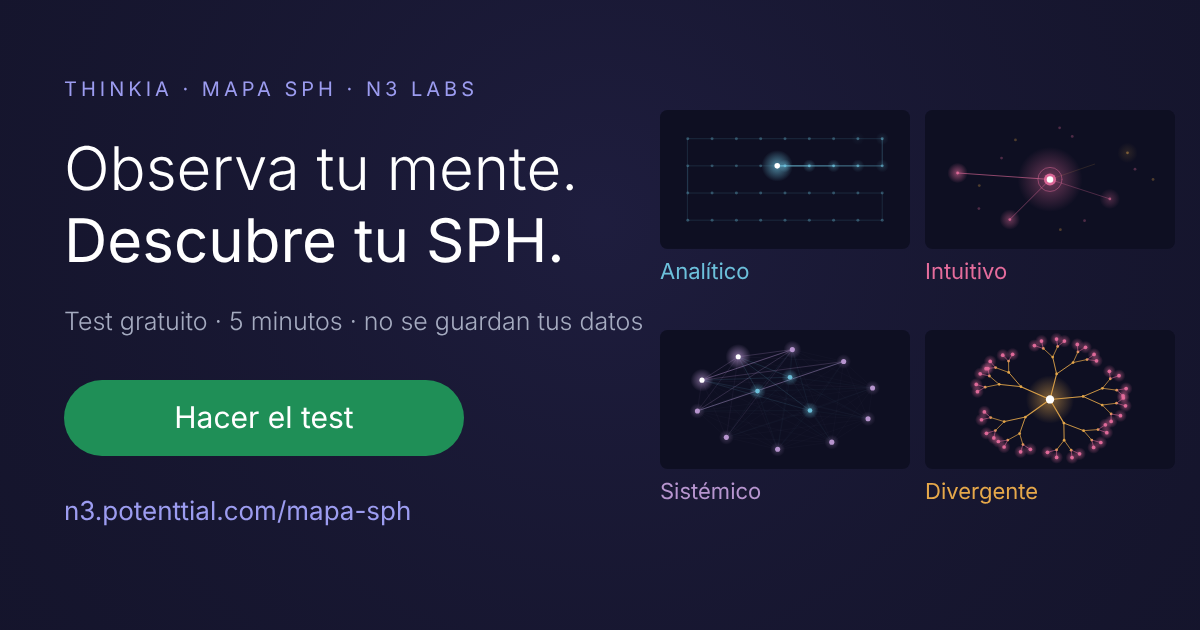
This is what each result looks like. When you finish the test, you get yours as an animation to share:
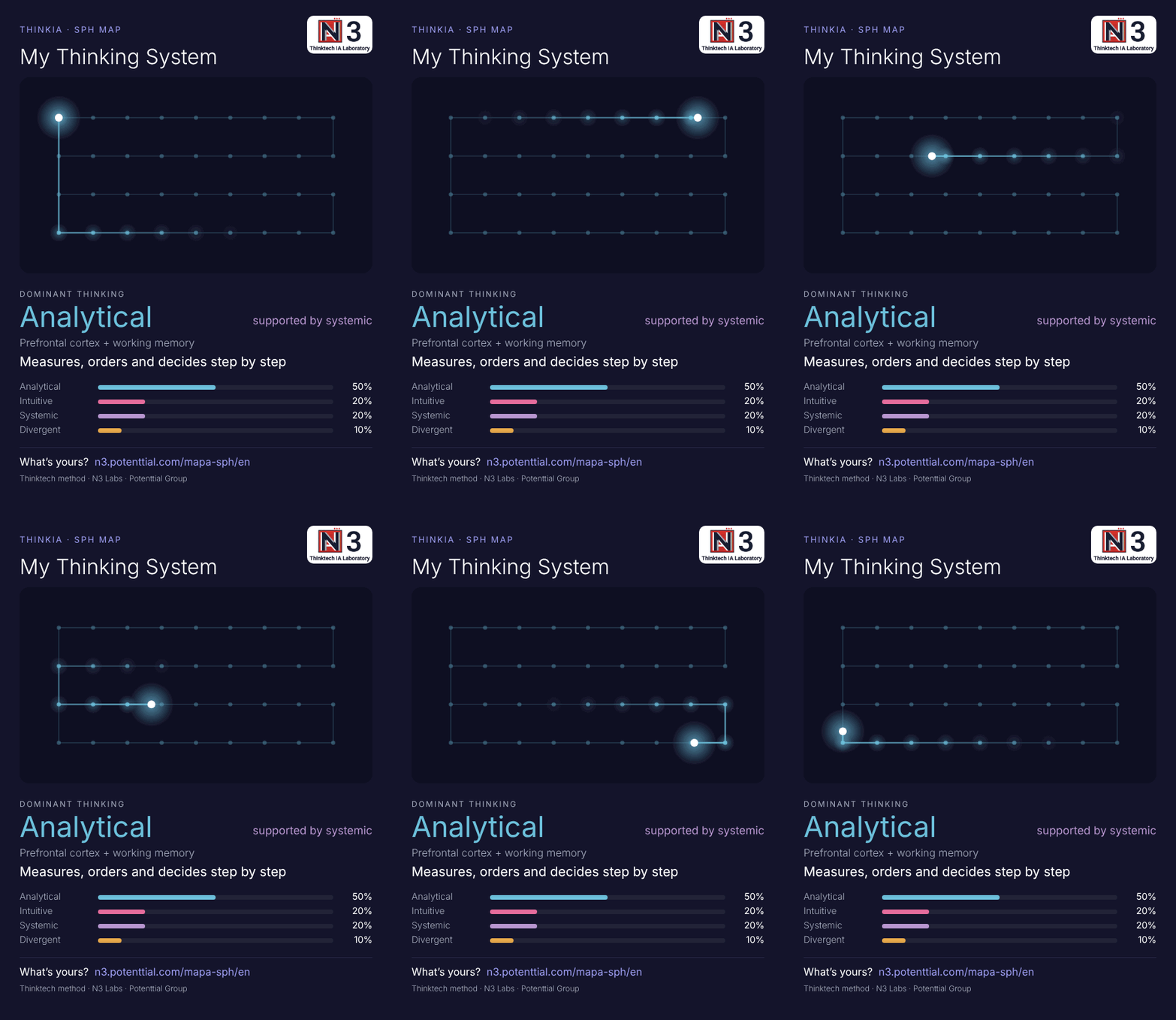
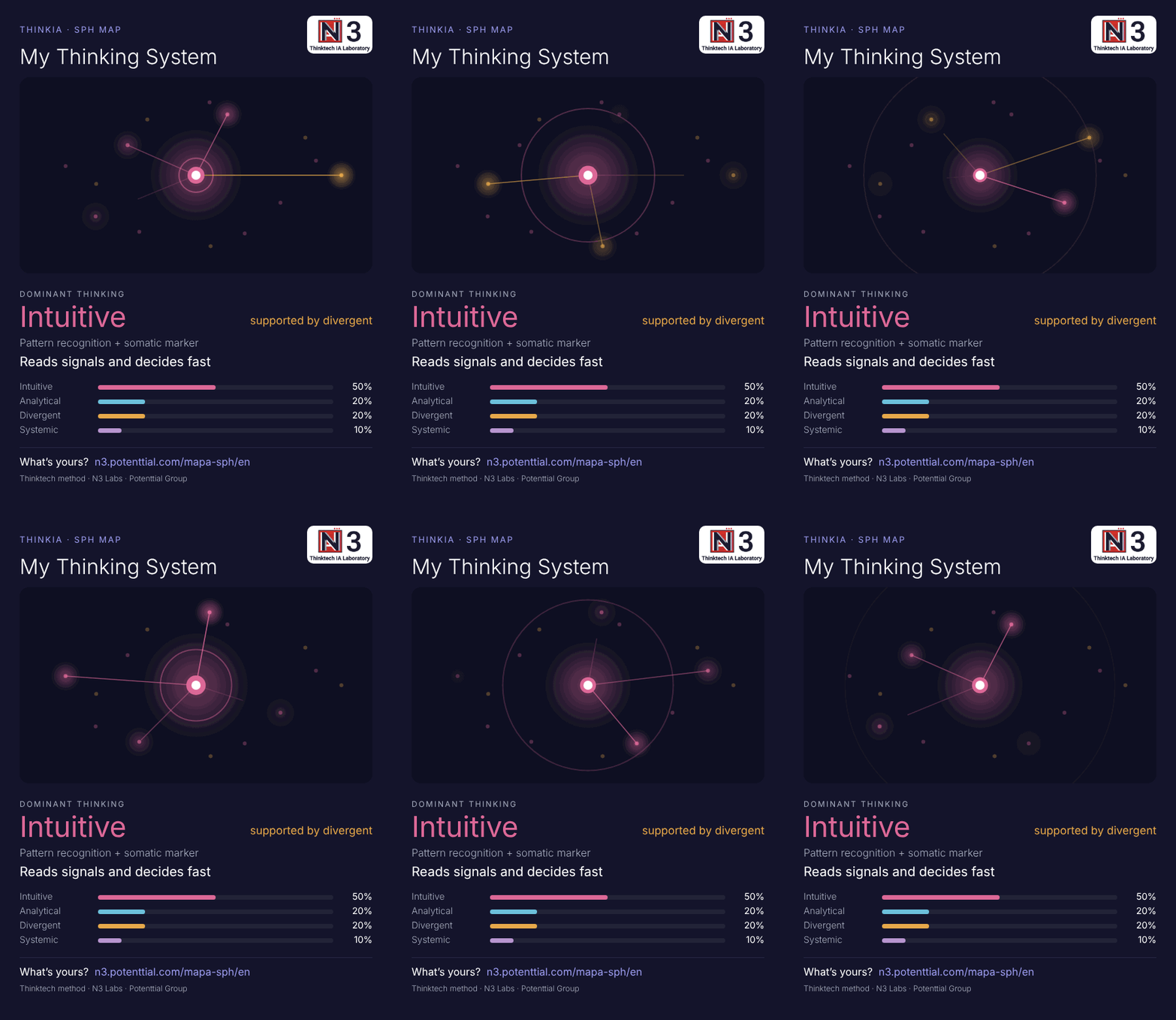
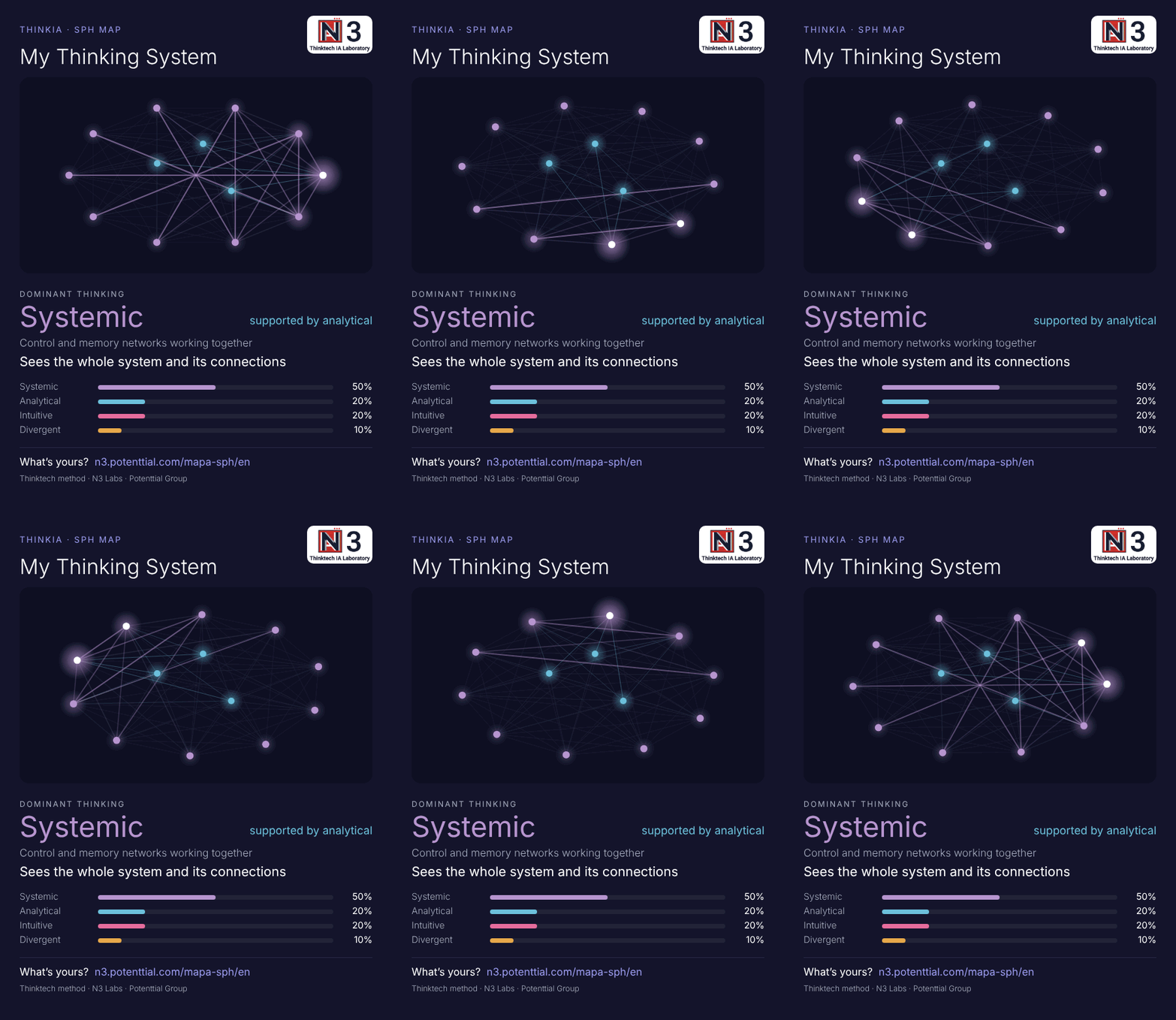
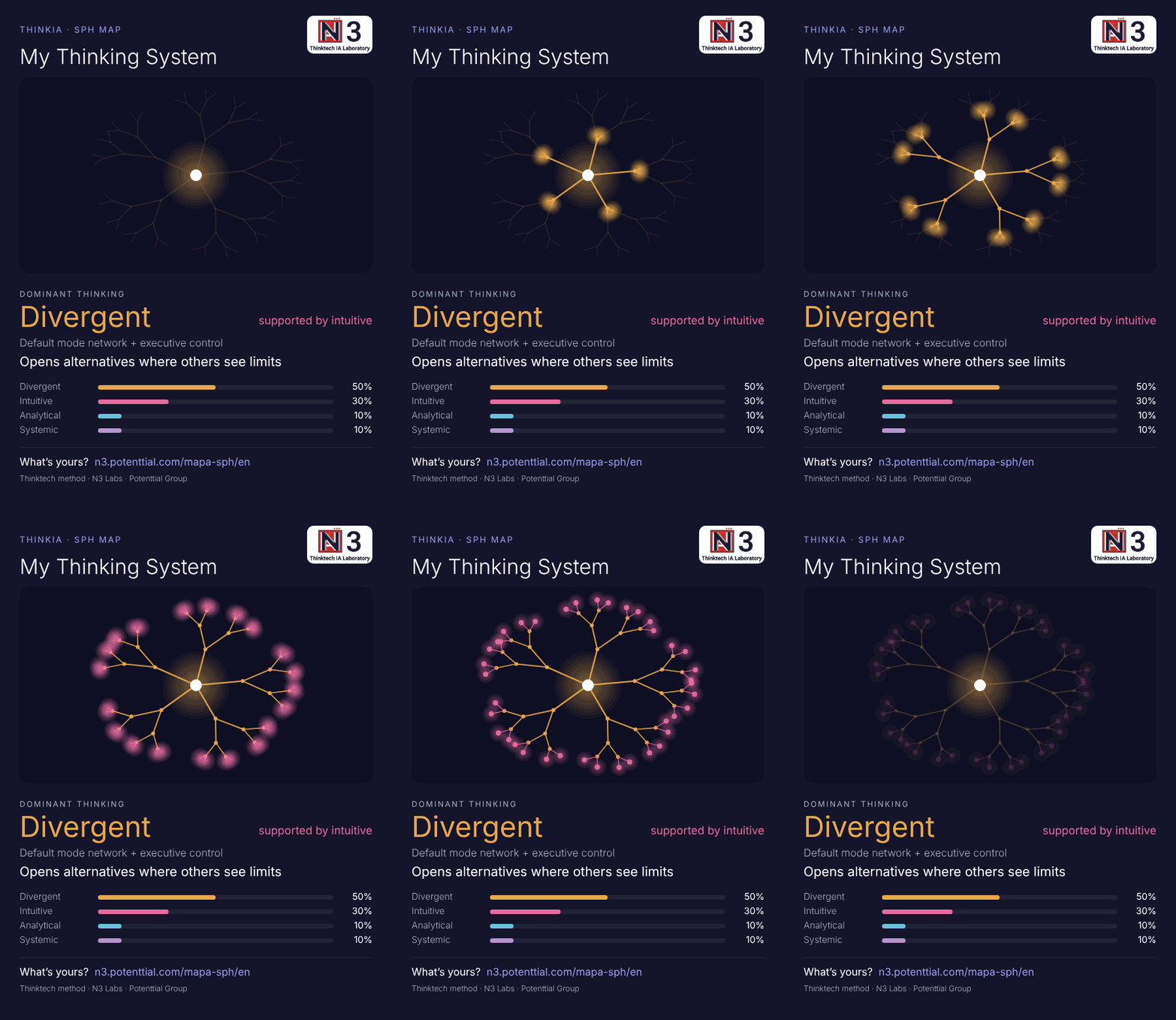
The test also crosses your answers with paradigms (“what gets measured gets managed”), cognitive biases (anchoring, confirmation, halo effect) and natural fears (losing control, being wrong, becoming irrelevant).
Why you need a mirror: the bias blind spot
In 2002, Emily Pronin, Daniel Lin and Lee Ross described the bias blind spot: we see biases in others more easily than in ourselves. That is why introspection alone falls short. You need an outside tool that shows you your pattern without judging it.
That is what the HTS Map does. It is not a psychological or clinical diagnosis; it is a reflection tool that shows tendencies so you can observe and configure them.
Your HTS and the AI’s ATS
AIs also process information with a system of their own, an Artificial Thinking System (ATS). Each assistant prioritizes, filters and reacts differently depending on how its maker trained it. It is a functional analogy, not a brain.
If you don’t know your HTS, the AI improvises a generic frame. If you know it and share it, the AI works with the way you think and can point out what your system tends to ignore. I call that sum algoritYO: HTS + ATS. On the same page as the test you can compare the ATS of ChatGPT, Copilot, Gemini, Claude, Grok and Meta AI.
How to take the HTS Map
- Go to n3.potenttial.com/mapa-sph/en (also in Spanish and Portuguese).
- Answer 6 context questions: age, industry, role, studies and the angle your inner voice speaks from.
- Choose how you act in 10 situations. Answer what you usually do, not what you think you should do.
- Get your map: dominant type, associated brain network, paradigms, biases, fears and well-known people with a similar style.
- Download your PDF and your GIF, and challenge someone on WhatsApp.
Your answers are not sent to any server; they stay in your browser.
Frequently asked questions
What is a Human Thinking System (HTS)?
The architecture a person uses to process information and decide: operating principles, cognitive filters, processing patterns and emotional triggers. It is the core concept of Engel Fonseca’s Thinktech method.
How can I observe my mind?
Through metacognition: watching how you think before you conclude. Because introspection has blind spots, an outside mirror helps, such as the HTS Map, which in 5 minutes shows your dominant thinking type, paradigms, likely biases and natural fears.
How long does the HTS Map take?
About 5 minutes: 6 context questions and 10 situations. It is available in English, Spanish and Portuguese at n3.potenttial.com/mapa-sph/en.
Is it a psychological test?
No. It is a reflection tool based on cognitive neuroscience; it does not diagnose or replace a professional.
What is a cognitive blind spot?
A bias that shapes your decisions without you noticing. Research on the bias blind spot (Pronin, Lin and Ross, 2002) shows we detect our own biases less well than other people’s.
How does the HTS relate to artificial intelligence?
AIs process information with an Artificial Thinking System (ATS). Knowing your HTS lets you give AI a frame of your own and choose the assistant whose ATS complements the way you think.
Is my data stored?
No. The test asks for no name or email, and your answers stay in your browser.
Conclusion: the first bias is believing you have none
We all have a thinking system, and almost nobody has seen theirs. Observing it is the first step to directing your mind instead of being directed by it, and to using AI as a complement to your judgment rather than a substitute for it.
I challenge you to see your mind and identify your HTS to find your blind spots
Take the HTS Map at n3.potenttial.com/mapa-sph/en →
ABOUT THE AUTHOR
Engel Fonseca is an entrepreneur, technology leader and cognitive neuroscientist. He is the founder of N3 Labs (Thinktech AI Laboratory) and CEO of Potenttial Group, a regional digital transformation consultancy with offices in Mexico, Miami and San Francisco.
With more than 10 years working with artificial intelligence, he was the AI representative for the “IA para todo México” program with Microsoft and CompuEducación, which trained more than 80,000 people. He created the Thinktech method of technological metacognition, the Curioxoma framework and #desmiedo; he is a partner at the Centro de Neurociencias Avanzadas at Hospital Ángeles del Pedregal and a Prosci-certified Change Practitioner.
As a keynote speaker, he brings AI through the lens of neuroscience to senior leadership in Mexico, Latin America and the US Hispanic market.
Sources: Flavell, J. H. (1979). “Metacognition and cognitive monitoring”. American Psychologist, 34(10). Fleming, S. M., Weil, R. S., Nagy, Z., Dolan, R. J. and Rees, G. (2010). “Relating introspective accuracy to individual differences in brain structure”. Science, 329. Kahneman, D. (2011). Thinking, Fast and Slow. Damasio, A. (1994). Descartes’ Error. Beaty, R. E. et al. (2018). “Robust prediction of individual creative ability from brain functional connectivity”. PNAS, 115(5). Pronin, E., Lin, D. Y. and Ross, L. (2002). “The Bias Blind Spot: Perceptions of Bias in Self Versus Others”. Personality and Social Psychology Bulletin, 28(3). The HTS Map is a reflection tool by N3 Labs, not a psychological or clinical diagnosis.