
¿Será que la creación de una IA tiene sesgo de su creador humano?
octubre 15, 2026
ATS Breakdown of the Leading AI Tools from N3 Labs
octubre 15, 2026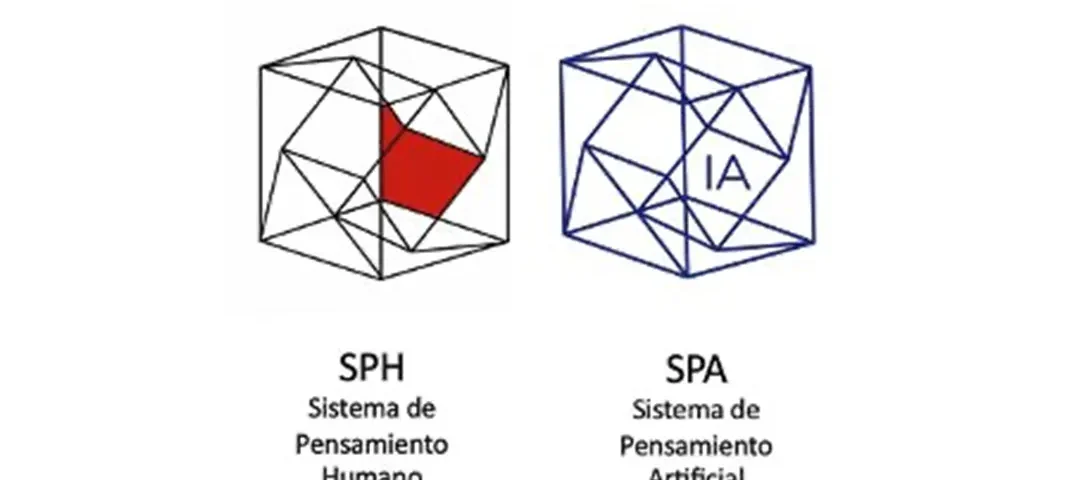
By Engel Fonseca, entrepreneur, technology leader and cognitive neuroscientist · Founder of N3 Labs
Short answer: artificial intelligence reaches its greatest scale when the Artificial Thinking System (ATS) is explicitly guided by the Human Thinking System (HTS). Feeding AI only with data (Know-What) forces the ATS to improvise its interpretive framework; adding the HTS (Know-How) activates the algorithMe and scales human judgment.
Artificial intelligence reaches its maximum capacity to scale when the Artificial Thinking System (ATS) is explicitly guided by the Human Thinking System (HTS). Limiting the training and use of language models to the massive transfer of data (Know-What) causes the ATS to improvise the logical framework of interpretation. When the prompt includes the specific thinking architecture of a profession, role or specialty, AI stops guessing and activates the algorithMe (algoritYO), scaling the human mind to an algorithmic level.
What happens when AI is fed only with data and no HTS?
For the human mind, information without meaning is invisible and irrelevant. Accumulating raw data does not create intelligence on its own. When artificial intelligence processes large volumes of information without receiving the HTS in its instructions (prompting), the ATS fills the gap by building a generic conceptual framework.
- Data without HTS: delivers information with an arbitrary meaning created by the ATS. It lacks the depth, nuance and contextual relevance that senior leadership demands.
- Data with HTS: connects data to the expert’s reasoning map. It delivers a higher level of interpretation and turns knowledge into decisive strategic choices.
How do you implement the Thinktech method of technological metacognition?
To keep the ATS from improvising, it is essential to structure the interaction with technology using the Thinktech method of technological metacognition, created by Engel Fonseca. The method examines the human mind as a dynamic system and maps five critical elements:
- Thoughts: the logical premises and deductions of the specialty.
- Feelings and emotions: the calibration of the impact of decisions.
- Paradigms: the structural beliefs through which reality is interpreted.
- Fears: the cognitive barriers and risks that must be mitigated.
- Values: the non-negotiable principles that govern ethics and decision criteria.
By translating this systemic map into the instructions of the generative model, the ATS stops being a passive query tool and becomes an optimized reflection of the specialist’s mental architecture.
What matters more when processing knowledge: the data or the author’s HTS?
When reading a book or a technical report, the greatest value is not in the facts presented but in accessing the author’s HTS: the unique perspective and deductive process with which they process the world.
Professionals and thought leaders add value not only through the amount of data they store (Know-What) but through the rigor of their mental framework (Know-How). When interacting with AI, feeding it what we know is not enough; the key to competitiveness lies in feeding it how we think.
How does HTS distillation apply at the enterprise level?
Codifying the HTS is not only an individual discipline; it is the pillar of corporate scalability. In change management for digital transformation, organizations must systematically document their strategic Know-How, not just their operational database.
Under the guidance of Engel Fonseca as an enterprise AI consultant for senior leadership, companies learn to distill the culture and judgment of their leaders into their technology architecture. This makes it possible to build institutional copilots aligned with the business vision, accelerating innovation without losing the organization’s cognitive identity.
Frequently asked questions
What is the difference between an HTS and an ATS?
The HTS (Human Thinking System) is the cognitive, ethical and methodological architecture of the human mind. The ATS (Artificial Thinking System) is the capacity of AI algorithms to process and execute logical patterns.
What is the algorithMe (algoritYO)?
It is the crystallization of an individual or corporate HTS inside an AI system: an extension of your own judgment that lets technology scale from the user’s mind.
What happens when AI is fed only with data and no HTS?
The ATS improvises a generic interpretive framework. The output carries an arbitrary meaning and lacks the depth, nuance and context that senior leadership needs.
Why does digital transformation require HTS-focused change management?
Because technology alone does not transform an organization. Leaders must adapt their paradigms and transfer their Know-How into AI processes to avoid digital bureaucracy and loss of meaning.
Conclusion
The invitation is to evolve your relationship with artificial intelligence: don’t just feed it what you know; configure it with the way you think through your HTS to unlock true cognitive scalability.
Keep reading: ATS breakdown of the leading AI tools and Why orchestra agents matter for the C-suite.
Know your HTS before you hand it to an AI
Take the Mapa SPH (HTS Map) at n3.potenttial.com/mapa-sph →
The tool is currently available in Spanish.
ABOUT THE AUTHOR
Engel Fonseca is an entrepreneur, technology leader and cognitive neuroscientist. He is the founder of N3 Labs (Thinktech AI Laboratory) and CEO of Potenttial Group, a regional digital transformation consultancy with offices in Mexico, Miami and San Francisco.
With more than 10 years working with artificial intelligence, he served as AI representative for the “IA para todo México” program with Microsoft and CompuEducación, which trained more than 80,000 people. He created the Thinktech method of technological metacognition, the Curioxoma framework and #desmiedo; he is a partner at the Centro de Neurociencias Avanzadas at Hospital Ángeles del Pedregal and a Prosci-certified Change Practitioner.
As a keynote speaker, he brings AI through the lens of neuroscience to senior leadership across Mexico, Latin America and the US Hispanic market.