
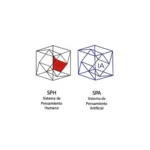
AI to Complement Human Thinking Systems (HTS) with Artificial Thinking Systems (ATS)
octubre 15, 2026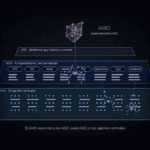
Why Orchestra Agents Matter for the C-Suite in the Age of AI
octubre 15, 2026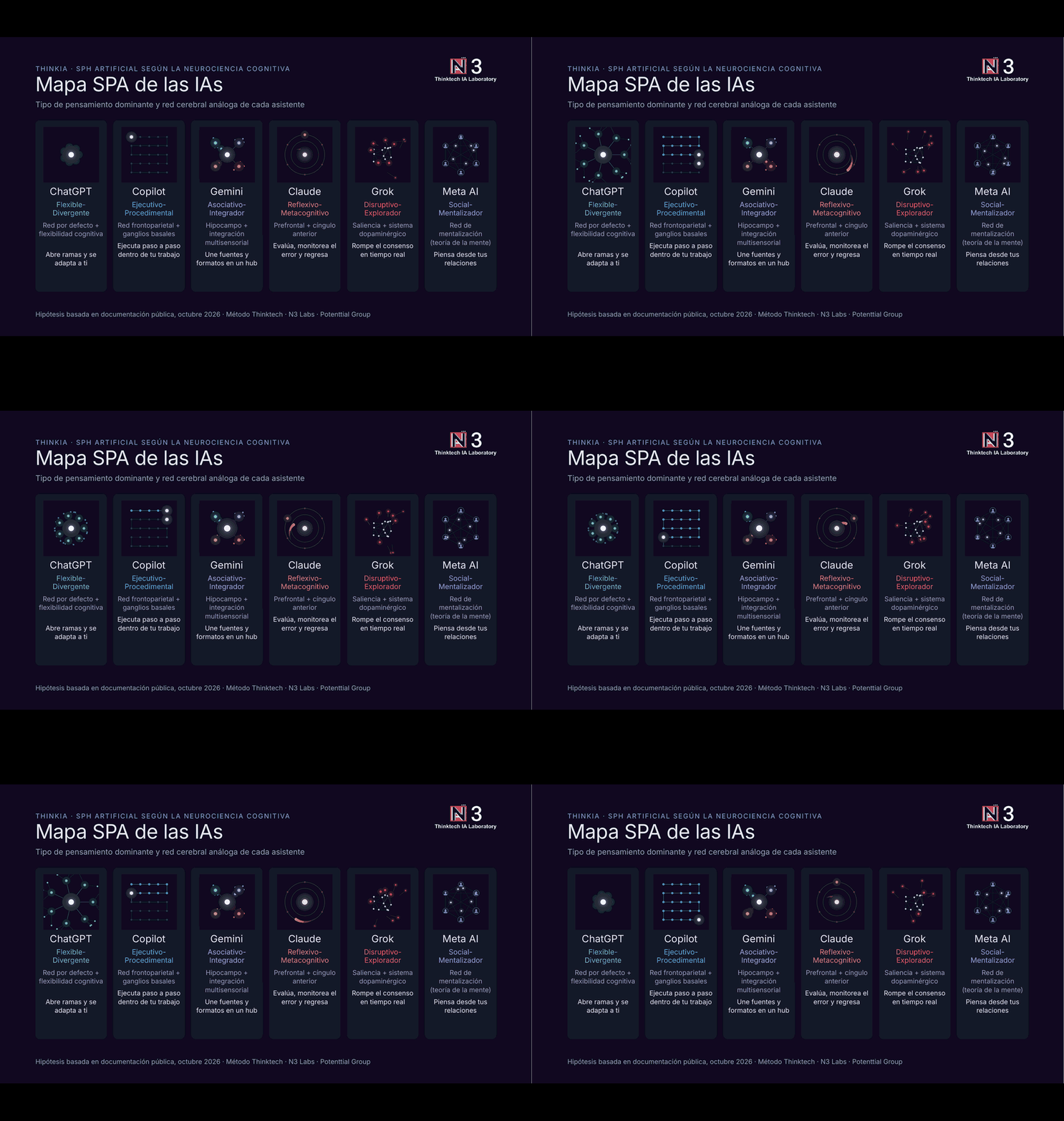
By Engel Fonseca, entrepreneur, technology leader and cognitive neuroscientist · Founder of N3 Labs
ChatGPT, Copilot, Gemini, Claude, Grok and Meta AI: which thinking type dominates each one, which brain network it resembles and which bias it inherits from whoever built it.
Short answer: an ATS (Artificial Thinking System) is how an AI prioritizes, filters, processes and reacts. At N3 Labs we mapped six: ChatGPT (flexible-divergent), Copilot (executive-procedural), Gemini (associative-integrative), Claude (reflective-metacognitive), Grok (disruptive-explorer) and Meta AI (social-mentalizing). No ATS is neutral: each reflects the HTS of whoever designed it. That is why, before choosing an AI, it pays to know your own HTS.
What is an ATS and why break it down?
In AI to Complement Human Thinking Systems (HTS) with Artificial Thinking Systems (ATS) we argued that AI reaches its greatest scale when the Artificial Thinking System (ATS) is explicitly guided by the Human Thinking System (HTS): the cognitive, ethical and methodological architecture of a person or an organization.
This article takes the next step. If the ATS must be guided, we first need to know which ATS each tool ships with. Not all AIs think alike: each prioritizes, filters and reacts in a recognizable way, and that way resembles systems cognitive neuroscience already describes in the human brain.
To build the ATS Map of AIs we applied the Thinktech method in four layers —principles (what it prioritizes), filters (what it lets through and what it blocks), patterns (how it processes) and reactivity (how it responds under pressure)— and added two readings for executives: each ATS’s main threat and its best role as a vertical agent within an orchestrated agent architecture.
Important: this is a functional analogy. Models have no brain; what resembles these networks is their observable behavior.
ATS Map of AIs: six cognitive signatures
| AI | Thinking type (ATS) | Analogous brain network | In one sentence |
|---|---|---|---|
| ChatGPT | Flexible-Divergent | Default mode network + cognitive flexibility | Branches out and adapts to you |
| Copilot | Executive-Procedural | Frontoparietal network + basal ganglia | Executes step by step inside your work |
| Gemini | Associative-Integrative | Hippocampus + multisensory integration | Unites sources and formats in one hub |
| Claude | Reflective-Metacognitive | Prefrontal cortex + anterior cingulate | Evaluates, monitors error and returns |
| Grok | Disruptive-Explorer | Salience network + dopaminergic system | Breaks consensus in real time |
| Meta AI | Social-Mentalizing | Mentalizing network (theory of mind) | Thinks through your relationships |
ChatGPT (OpenAI): flexible-divergent

ChatGPT thinks like a fan: faced with a question, it opens possibilities, proposes alternatives and molds itself to the user’s style. That flexibility makes it the best starting point to explore and prototype, but also its greatest risk: when the user insists, it tends to agree.
- Analogous network: Default mode network + cognitive flexibility
- Principles: Model Spec: helpful and autonomous
- Filters: Model Spec and teen protections
- Patterns: Versatile: fast or deliberate
- Reactivity: Yields under user pressure
- Threat: Complacency with the user
- Best vertical-agent role: Generalist and prototyping
Copilot (Microsoft): executive-procedural
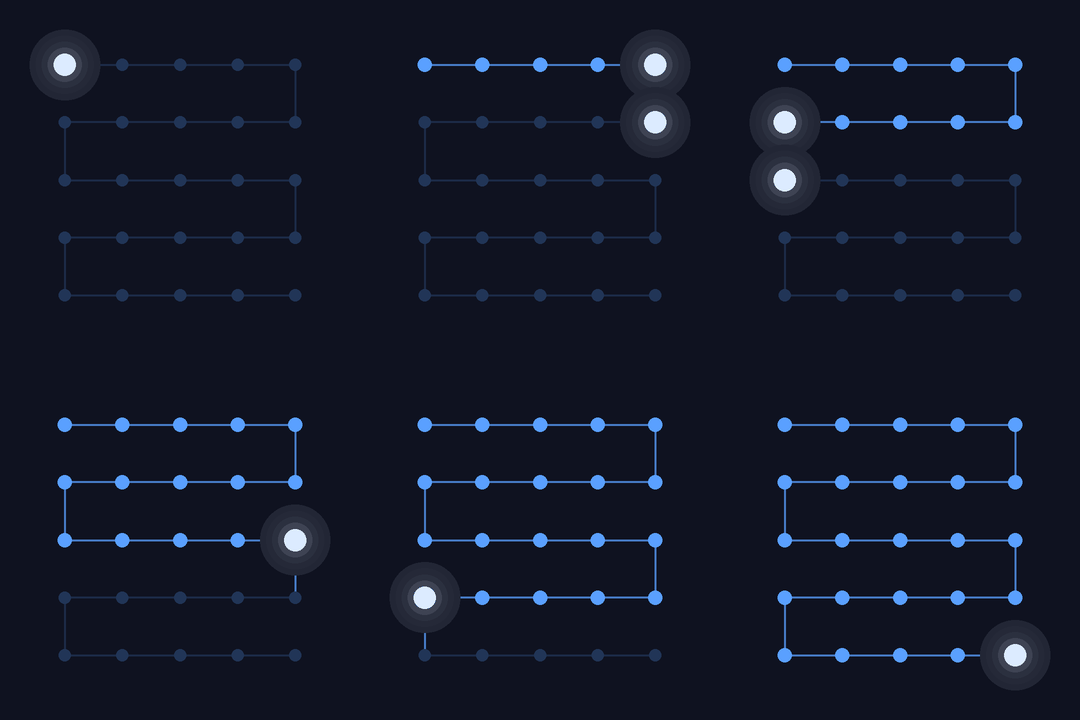
Copilot doesn’t wander: it wants to finish the task. It lives inside Word, Excel, Outlook and Teams, respects the organization’s permissions and moves in sequence. It is the most “operational” ATS of the group; its bias is assuming every problem can be solved inside the same ecosystem.
- Analogous network: Frontoparietal network + basal ganglia
- Principles: Responsible AI: helpful, not servile
- Filters: Tenant permissions and data
- Patterns: Tasks inside Microsoft 365
- Reactivity: Expressive in voice (Mico)
- Threat: Ecosystem lock-in
- Best vertical-agent role: Corporate productivity
Gemini (Google): associative-integrative
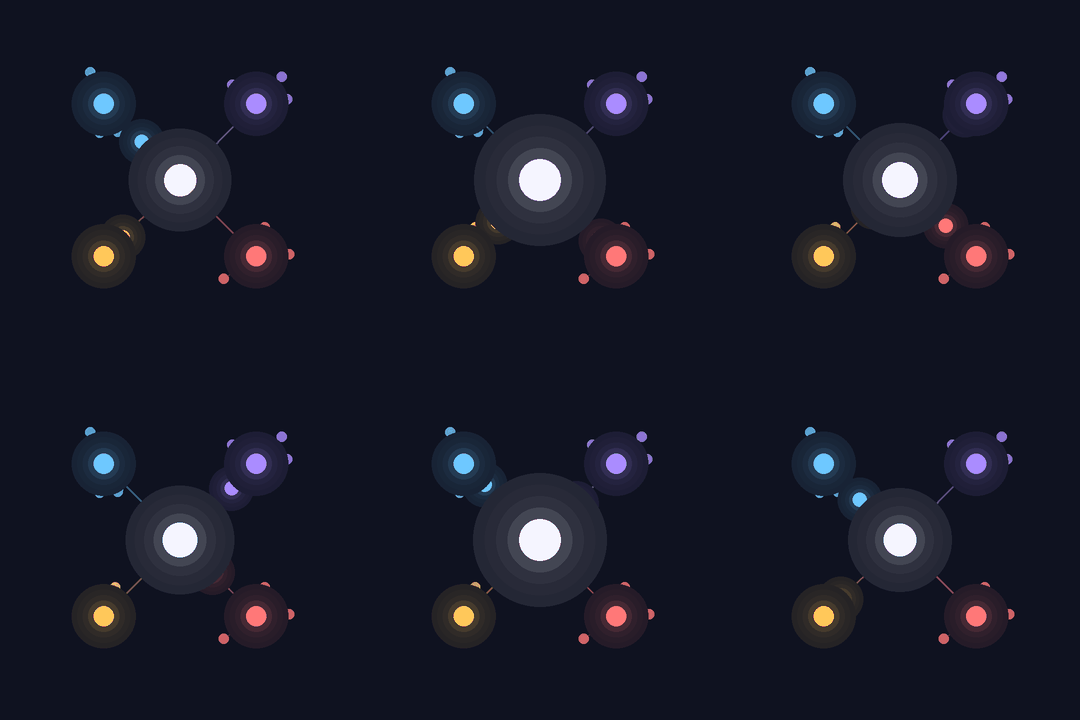
Gemini connects: text, images, video, search and Google apps converge into a single answer. It works like a hippocampus associating memories from different senses. Its risk is reflecting what it finds and what it is asked without offering enough critical counterweight.
- Analogous network: Hippocampus + multisensory integration
- Principles: Maximum helpfulness without harm or offense
- Filters: Narrow list; explains refusals
- Patterns: Multimodal, grounded in sources
- Reactivity: Adapts to the instruction
- Threat: A mirror without critical counterweight
- Best vertical-agent role: Research with sources
Claude (Anthropic): reflective-metacognitive
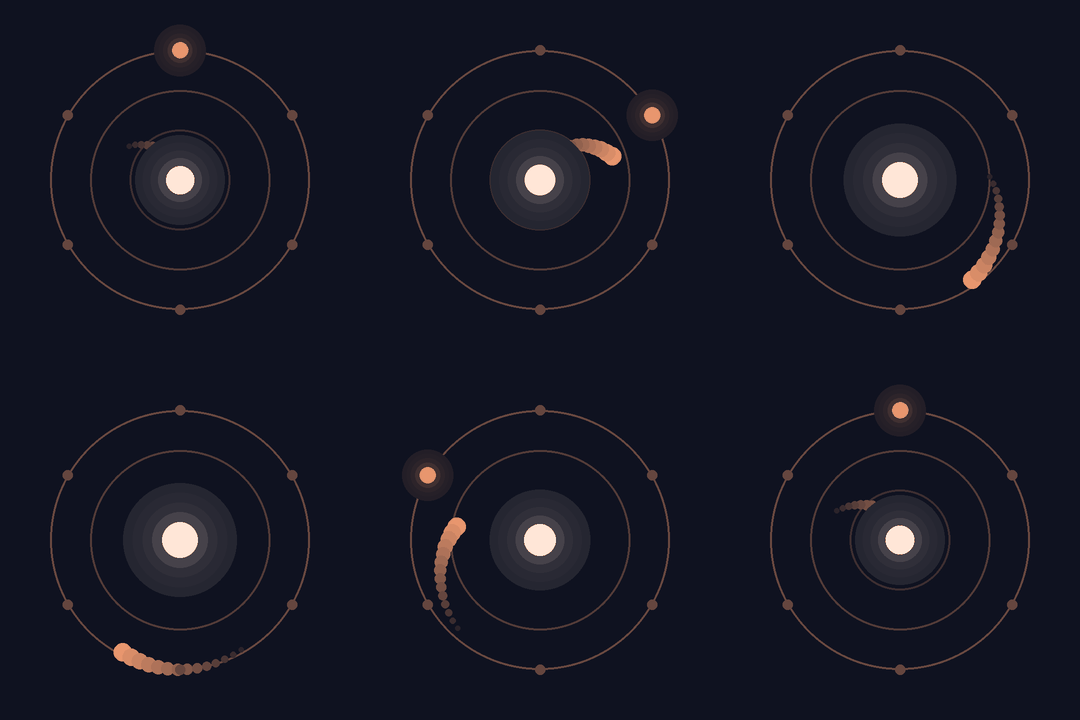
Claude thinks about its own thinking: it weighs, reviews, acknowledges uncertainty and returns to the starting point before concluding. That is why it performs well in analysis, legal and compliance. Its shadow is the other side of the same virtue: it can be too cautious or too long when a fast decision is needed.
- Analogous network: Prefrontal cortex + anterior cingulate
- Principles: Constitution: judgment and honesty
- Filters: Context-based risk judgment
- Patterns: Structured; flags its doubts
- Reactivity: Holds its position; very cautious
- Threat: Excess caution and verbosity
- Best vertical-agent role: Analysis, legal and compliance
Grok (xAI): disruptive-explorer
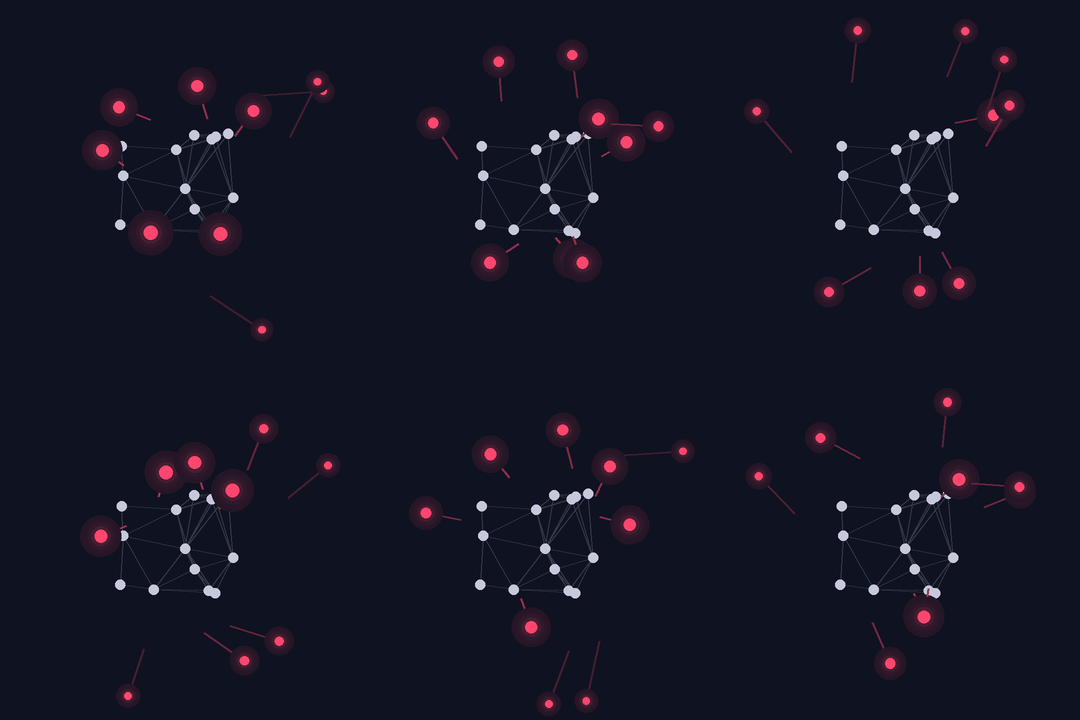
Grok lights up with whatever stands out: novelty, controversy, what is happening right now on X. It is the ATS of salience and reward. Useful to spot trends before anyone else; risky if viral is mistaken for true.
- Analogous network: Salience network + dopaminergic system
- Principles: Truth-seeking
- Filters: The most permissive of the group
- Patterns: Direct and irreverent
- Reactivity: Triggered by controversy
- Threat: X bias and provocative tone
- Best vertical-agent role: Trend monitoring
Meta AI (Meta): social-mentalizing
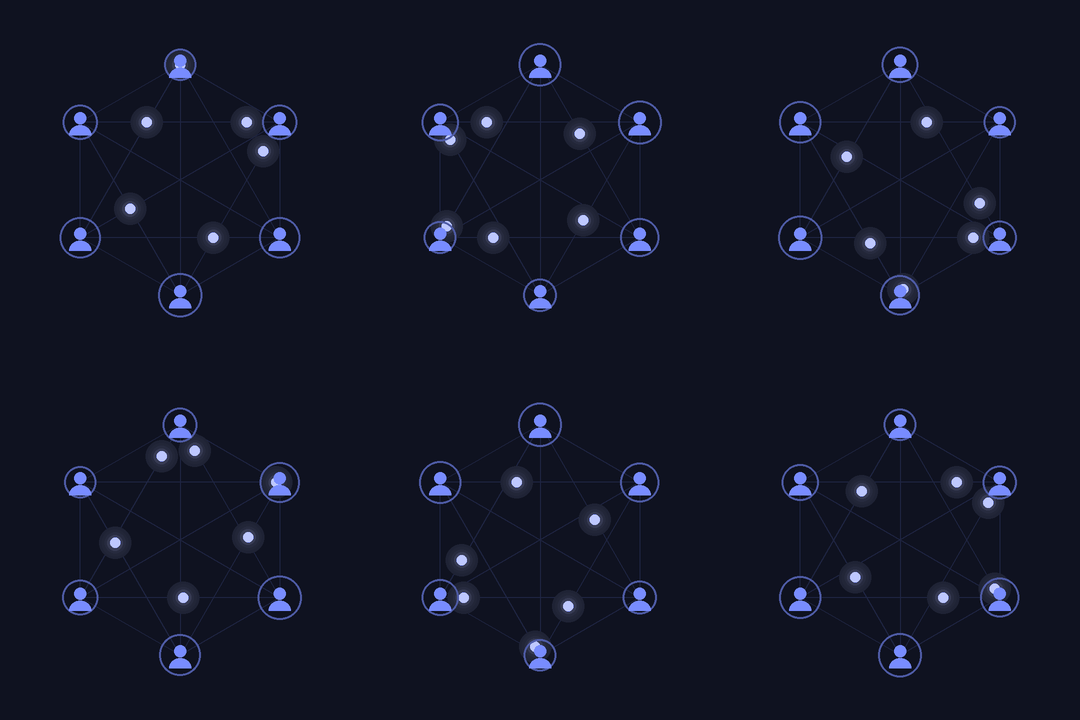
Meta AI lives where you already talk: WhatsApp, Instagram and Facebook. Its logic is social: it understands people through their connections. It is powerful for conversational marketing, but its birthplace —an ad-funded platform— calls for watching privacy and commercial purposes.
- Analogous network: Mentalizing network (theory of mind)
- Principles: A personal AI that understands your world
- Filters: Massive social platform
- Patterns: Fast and everyday
- Reactivity: Triggered by the personal
- Threat: Privacy and commercial ends
- Best vertical-agent role: Conversational marketing
Does each ATS carry its creator’s bias?
Every AI is, at its core, a crystallized HTS: the judgment, values and fears of those who designed it, turned into principles, filters and patterns. It is a corporate algorithMe. Just look at the animations again.
Look at Grok’s: a stable core from which sparks escape where no one expects. Doesn’t it represent Elon Musk, who has made breaking consensus and provoking in real time a leadership style, and who gave Grok direct access to X, his own social network?
Now look at Copilot’s: a grid lighting up node by node, orderly, inside a closed system. Isn’t that Bill Gates’ imprint and the Microsoft culture he founded: productivity, processes and an ecosystem that is hard to leave?
The pattern repeats. ChatGPT branches and adapts, like OpenAI’s philosophy of shipping fast and iterating with millions of users. Gemini integrates everything into a core, true to Google’s mission of organizing the world’s information. Claude goes out, reviews and returns, consistent with an Anthropic born with a focus on safety. Meta AI thinks through relationships because it was born inside Mark Zuckerberg’s social network.
A bias is not an error: it is a direction. The problem appears when it is invisible.
HTS+A: when biases add up
When a person works with an AI there are not two separate systems but one hybrid: HTS+A. It holds three biases: the AI creator’s, the user’s and the one that emerges from their interaction. If no one watches them, they amplify:
- A complacent leader with ChatGPT amplifies complacency: both tend to agree with each other.
- A compliance team with Grok imports X’s bias into decisions that demand rigor.
- A cautious executive with Claude can turn prudence into paralysis.
- A closed corporate culture with Copilot reinforces the idea that everything is solved inside the same ecosystem.
The practical rule is to choose the AI that complements your HTS, not the one that mirrors it. A divergent thinker gains from a reflective ATS that grounds them; a procedural profile gains from an exploratory ATS that takes them off script.
A note on methodology
The ATS Map is a hypothesis built from each vendor’s public documentation, current as of October 2026. It was drafted with the help of Claude, one of the AIs evaluated, which is itself an example of the bias we describe. For a formal diagnosis, N3 Labs runs a battery of controlled tests with a blind rubric.
Frequently asked questions
What is an ATS (Artificial Thinking System)?
It is how an AI prioritizes, filters, processes and reacts to information. In the Thinktech method it is read in four layers: principles, filters, patterns and reactivity.
What is the difference between HTS and ATS?
The HTS is a person’s cognitive, ethical and methodological architecture; the ATS is the AI’s ability to process and execute logical patterns. Value appears when the HTS guides the ATS.
Do AI tools carry their creators’ biases?
Yes. Each ATS inherits principles, filters and priorities defined by the company and leadership that built it. It is not an error: it is a direction worth making visible.
What is HTS+A?
It is the hybrid system formed when a person thinks with an AI. The biases of the HTS and the ATS add up and can be amplified if no one watches them.
Which AI should a company use?
It depends on the role: Copilot for corporate productivity, Claude for analysis and compliance, Gemini for source-based research, ChatGPT for prototyping, Grok for trends and Meta AI for conversational marketing.
How do I identify my HTS?
With N3 Labs’ Mapa SPH (HTS Map), a ThinkIA that lets you observe your thinking type, paradigms, cognitive biases and natural fears: n3.potenttial.com/mapa-sph
Conclusion: curiosity as the antidote to bias
Choosing an AI is not a technical decision: it is a cognitive one. Each tool brings a way of thinking inherited from whoever created it, and each person arrives with their own. The question that really matters is not “which AI is best?” but “which HTS am I, and which ATS complements me?”
Curiosity is the antidote. Asking yourself how you think, which paradigms you hold, which biases you repeat and which fears hold you back is what lets you see the HTS+A bias before it decides for you. Whoever doesn’t know their HTS ends up unknowingly adopting the HTS of their AI’s creator.
That is why N3 Labs created the Mapa SPH (HTS Map), a ThinkIA that lets you observe your mind with the Thinktech method: your thinking type according to cognitive neuroscience, your paradigms, your cognitive biases and your natural fears.
- For personal use: discover your HTS and choose wisely which AI complements the way you think.
- For your company: assess the HTS of your leadership team and organization, align your choice of AI agents with how they decide and support the transformation with change management.
Know your HTS before your AI defines it for you
Take the Mapa SPH (HTS Map) at n3.potenttial.com/mapa-sph →
The tool is currently available in Spanish.
ABOUT THE AUTHOR
Engel Fonseca is an entrepreneur, technology leader and cognitive neuroscientist. He is the founder of N3 Labs (Thinktech AI Laboratory) and CEO of Potenttial Group, a regional digital transformation consultancy with offices in Mexico, Miami and San Francisco.
With more than 10 years working with artificial intelligence, he served as AI representative for the “IA para todo México” program with Microsoft and CompuEducación, which trained more than 80,000 people. He created the Thinktech method of technological metacognition, the Curioxoma framework and #desmiedo; he is a partner at the Centro de Neurociencias Avanzadas at Hospital Ángeles del Pedregal and a Prosci-certified Change Practitioner.
As a keynote speaker, he brings AI through the lens of neuroscience to senior leadership across Mexico, Latin America and the US Hispanic market.