
¡No sean envidiosos! La sabiduría es humana, la inteligencia artificial complementa
noviembre 17, 2026
Distribuidores Ford de 39 países reúnen 1860 toneladas de alimentos
noviembre 17, 2026
By Engel Fonseca, entrepreneur, technology leader and cognitive neuroscientist · Founder of N3 Labs
Short answer: in the face of artificial intelligence, the biggest human mistake is not envy: it is self-deception. Believing we can create value just by replicating, without quality attention, and wanting to charge the same for what now takes less effort. Wisdom is human and AI complements it. The way out is the abundance mindset: passing on to others the benefit of doing more and faster, trusting that being more accessible does not take work away from us, it brings more.
What if life told us in Chinese?
A few days ago I wrote a question I cannot let go of: if life wanted to teach us about the superiority of human intelligence over artificial intelligence, would it tell us in Chinese?
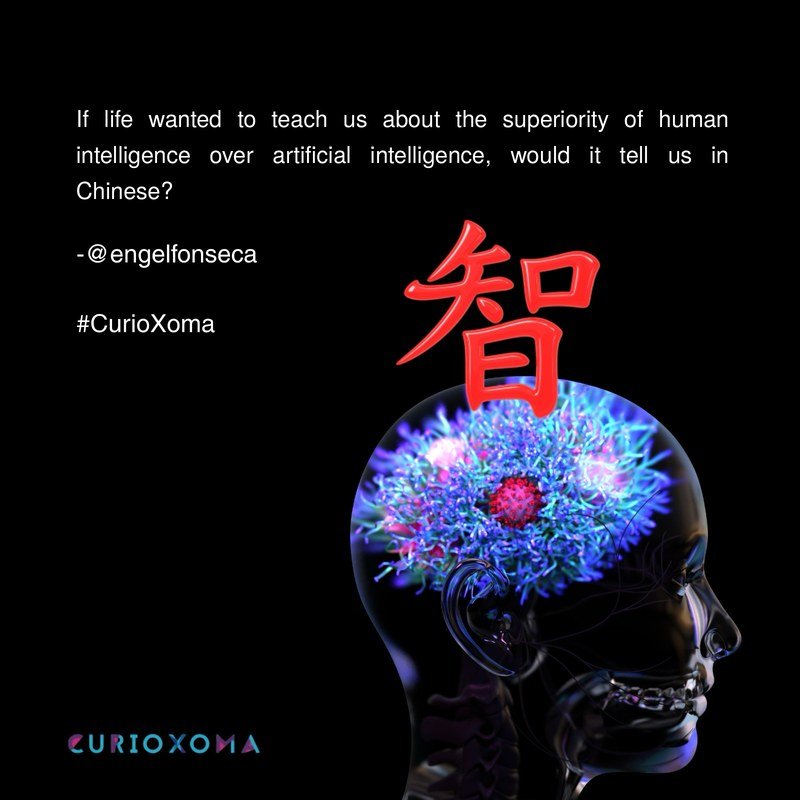
The character 智 (zhì) translates as wisdom or intelligence. A common reading describes it as 知 (to know) over 日 (sun or day): knowledge exposed to the light of the days. Wisdom is not knowing more; it is knowing that has already passed through life.
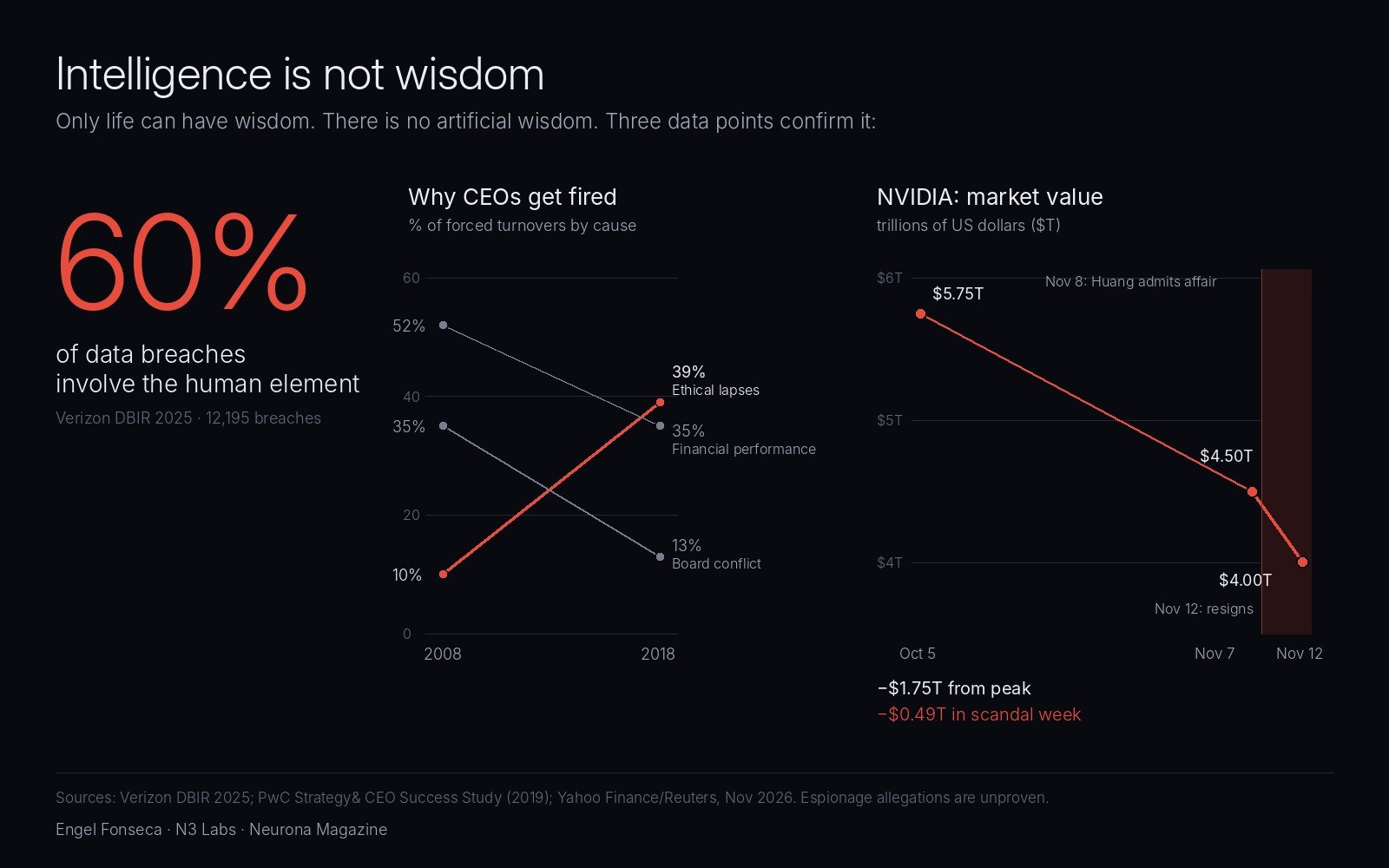
In November 2026, the company that has done the most to drive artificial intelligence went through a deeply human crisis. On November 8, NVIDIA co-founder Jensen Huang admitted an extramarital relationship and the board opened an investigation. According to press reports, the woman is believed by US intelligence to be a Chinese asset; Beijing denies it and the Justice Department says it has not reached any conclusion. On November 12, Huang resigned as CEO.
I am not writing this to judge a person; the allegations are unproven. I bring it up because it is a symbol: no intelligence, not even the most powerful artificial one, replaces wisdom.
Is envy the biggest human sin in the face of AI?
It would seem so. Many people feel envy or fear that AI is smarter, writes better or works faster. But envy looks outward, and the real problem is inside.
The real sin is self-deception: believing we can create value just by replicating what AI produces, without quality attention. And believing we can charge the same, with the same pitch, for something that now costs us less.
“It takes me less work and less time, and I want to charge the same”
Isn’t that unfair? That sentence comes from the scarcity mindset: the fear that if I work faster and cheaper, I will lose. Our greatest contribution is thinking, so we should charge for the thinking, not for the hours AI saved us. The right question is not how to hide the savings, but how to pass on the benefit of doing more and faster.
The types of creators in the face of AI
I talked about it in this reel (in Spanish): not all creators react the same way to AI.
| Type of creator | What they do with AI | What they get |
|---|---|---|
| The replicator | Copies and pastes what AI produces, without quality attention. | Noise. Loses trust and becomes replaceable. |
| The hoarder | Produces faster, charges the same and hides the savings. | Wins today and loses tomorrow, when the client finds out. |
| The amplifier | Passes on the benefit: delivers more, faster or more accessibly. | Serves more people and grows. |
| The wise one | Uses AI to free up time and put quality attention on what only they can think. | Adds value that AI cannot replicate. |
From the scarcity mindset to the abundance mindset with AI
In 2016 I wrote Internet vs the culture of scarcity (in Spanish). There I argued that the root of the problem is believing “there is little of something”, that the antidote is believing in abundance, and that the value of knowledge lies in its application. Ten years later, artificial intelligence puts that idea to the test.
| Scarcity mindset | Abundance mindset |
|---|---|
| “If I work faster and cheaper, I will lose income.” | “If I work faster and more accessibly, more people will be able to hire me.” |
| Hides the savings AI provides. | Passes the benefit on to the client. |
| Competes on price against the machine. | Competes on judgment, meaning and wisdom. |
| Hoards knowledge. | Puts knowledge in motion. |
| Holds on to money for fear of losing it. | Sees money like water: it does not disappear, it only transforms. |
Economics offers a clue. In 1865, William Stanley Jevons observed that when a technology makes the use of a resource more efficient, total consumption of that resource tends to rise, not fall. Something similar may happen with applied thinking in the age of AI: if it is faster and more accessible, more people can afford it. Being fast and accessible does not have to cost us work; it can bring us more, as long as we put in quality attention.
What AI complements and what is only human
| AI complements | Only human |
|---|---|
| Speed and volume | Quality attention |
| Memory and calculation | Judgment and ethics |
| Drafts and variations | Meaning and purpose |
| Patterns in data | Wisdom from lived consequences |
To avoid self-deception, we need to observe where we think from. That is Thinktech: technological metacognition to observe thinking systems. Whoever observes their system stops replicating on autopilot and starts thinking.
Frequently asked questions
Can artificial intelligence have wisdom?
No. For Engel Fonseca, intelligence is the ability to process information and solve problems, and AI already has it on many fronts. Wisdom is knowing what to do with what you know based on lived consequences, and only life has it. There is no artificial wisdom: AI complements it.
What is the biggest human mistake in the face of AI?
Not envy, but self-deception: believing we can create value just by replicating what AI produces, without quality attention, and wanting to charge the same for what now takes less effort.
Is it fair to charge the same if AI saves me time?
What is fair is to charge for the thinking you contribute, not for the hours AI saved you, and to pass part of that benefit on to the client: more deliverables, more speed or a more accessible price. Hiding the savings is a scarcity strategy.
What is the abundance mindset applied to AI?
It is believing that there is plenty of what is good, and seeing money like water, which does not disappear but transforms: if AI lets you do more and faster, being more accessible will attract more people instead of taking work away. Engel Fonseca set out abundance versus scarcity culture in Neurona Magazine in 2016.
What happened with NVIDIA and Jensen Huang?
On November 8, 2026, Jensen Huang admitted an extramarital relationship and NVIDIA’s board opened an investigation. Outlets such as The New York Times reported that the woman is believed by US intelligence to be a Chinese asset; Beijing denies it and the Justice Department has not reached any conclusion. Huang resigned as CEO on November 12.
What does the Chinese character 智 mean?
The character 智 (zhì) translates as wisdom or intelligence. A common reading describes it as 知 (to know) over 日 (sun or day): knowledge exposed to the light of the days.
Don’t be envious: be wise
AI is not here to take away what is human; it is here to show us how human we are. Use AI to do more, be more accessible and put your quality attention where only you can think.
If you are thrifty but not envious with your AI tokens, use this tool:
N3 Labs Tokenómetro →
What is Thinktech? →
Book a keynote →
Key definitions
Intelligence: the ability to process information and solve problems. AI already has it on many fronts.
Wisdom: knowing what to do with what you know, based on lived consequences, with perspective and purpose. Only life has it; there is no artificial wisdom.
Quality attention: truly thinking through what you deliver: reviewing, questioning and adding your own judgment instead of copying and pasting. Attention is the most valuable resource on planet Earth (in Spanish), and AI cannot pay it for you.
Abundance mindset: believing that there is plenty of what is good: opportunities, knowledge and work. In economic terms, seeing money like water: it does not disappear, it only transforms.
Sources: Verizon, Data Breach Investigations Report 2025. PwC Strategy&, CEO Success Study (2019). Reuters, The New York Times, Al Jazeera and The Next Web, November 2026. Jevons, W. S. (1865), The Coal Question. Fonseca, E. (2016), “Internet vs la cultura de la escasez”, y (2025), “El recurso más valioso en el planeta Tierra: la atención”, Neurona Magazine. The espionage allegations related to NVIDIA are unproven.
ABOUT THE AUTHOR
Engel Fonseca is an entrepreneur, technology leader and cognitive neuroscientist. He created Thinktech, the technological metacognition method, and Curioxoma. He is the founder of N3 Labs (Thinktech IA Laboratory), CEO of Potenttial Group and a partner at the Advanced Neuroscience Center (Centro de Neurociencias Avanzadas) at Hospital Ángeles del Pedregal.
He brings more than 20 years of technology innovation and over 10 years working with artificial intelligence. He was the AI representative of the “IA para todo México” program with Microsoft and CompuEducación, which trained more than 85,000 people. He is a TEDx speaker and a Prosci-certified Change Practitioner.